


液压软管故障最常见的原因是磨损,布线不良,高温,管子腐蚀,接头附近的软管弯曲,流体不相容以及组装不当。无论涉及何种行业或设备类型,这些故障都是严重的问题,软管故障会导致机器和整个系统关闭,从而导致停机,昂贵的维修和其他财务损失。如果涉及高压,则在软管破裂时也可能对员工造成人身伤害的危险。在本文中,众友重工将讨论液压软管故障的七个最常见原因以及如何预防它们。
1. wear:
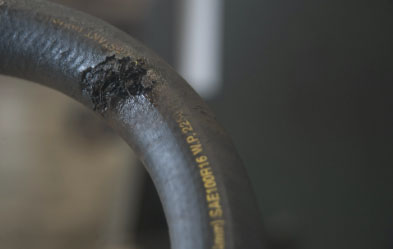
Hoses are not fixed-they will shrink or stretch as the internal pressure changes, and when the hose rubs against objects (including other hoses, especially metal edges), it will cause wear. Wear is a very common cause of hydraulic hose failure. Wear occurs when the outer layer of the hose wears to the extent that the reinforcing steel wire is exposed. It could eventually lead to a leak.
In order to minimize wear, some hoses add plasticizers to the material that makes up the hose cover. If there is a specific problem area, a plastic protective cover or nylon sleeve can be used to protect the hose.
Poor 2. wiring:
Another major cause of hydraulic hose failure is poor wiring, avoid passing the hose through potential grinding areas or pivot points, do not pass the hose through hot areas unless there is no other option, pay close attention to the minimum bending radius to avoid bending, kinking and breaking.
If the hose is likely to move a lot, consider using a rotary joint at its end. In short, use alternative routes, longer hoses or different accessories as needed, and plan the route that will cause the least wear or bending.
3. high temperature and thermal aging cause hydraulic hose failure:
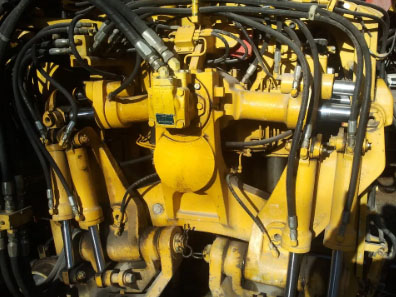
When the hoses are exposed to extreme temperatures, they begin to lose their elasticity and harden. The high temperature causes the plasticizer in the inner tube of the elastomer to decompose, then harden and begin to break. Over time, these cracks will eventually reach the outside of the hose. If the hose is removed and a cracking sound is made when the hose is bent, or the hose maintains a bent shape, the problem is thermal aging.
In order to minimize the effects of thermal aging, please avoid unnecessary passing of the hose through high temperature areas, and verify that the rated operating temperature of the hose is the appropriate continuous operating temperature. If heat dissipation cannot be avoided, please consider using the hose Heat shield.
4. tube erosion:
Inner tube corrosion is usually caused by a concentrated high-speed fluid flow (possibly with particles) that gradually erodes the inner tube of the hose. As the corrosion continues, external leaks may occur.
One of the best ways to prevent pipeline corrosion is to determine the correct hose size for the maximum expected fluid velocity. Another way to minimize the impact of pipeline corrosion is to verify that the fluid's abrasiveness is compatible with the type of hose used.
5. the problem at the bent hose and the fitting:
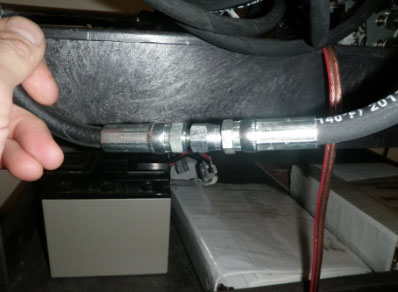
Another common area of hydraulic hose failure occurs at the joint where the hose and crimp seal meet. This is usually due to poor hose routing or excessive weight of the hose itself, causing the hose to bend too tightly to the actual fitting.
A good way to solve this problem is to use a bend limiter, which is a plastic or rubber sleeve about six inches long, which is more resistant to bending than the hose itself, and it adds extra support to the hose in the problem area.
6. fluid incompatibility:
Not all fluids and hydraulic hoses are compatible. If an incompatible fluid is used with a good quality hose, it may cause the hose to disintegrate from the inside, expand and delaminate. If the hose disintegrates and leaks, it may cause serious particle pollution to the hydraulic system.
Ensure that all hydraulic hoses in use are compatible with the fluid passing through them.
Improper 7. assembly:
Improper assembly is another cause of hydraulic hose failure. After cutting the hose, the hose must be carefully cleaned and flushed to prevent contamination by residual abrasive debris. The inner tube should be as clean as possible, and after the joint is crimped in place, The end of the hose should be clamped.
The importance of preventive maintenance of 8. hydraulic hose failure:
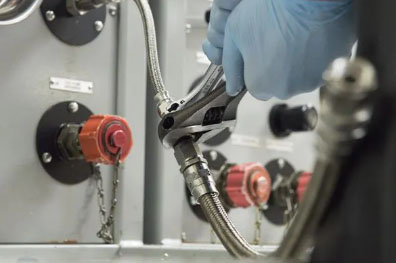
Many hose failure problems can be solved by ensuring that the hose is compatible with the environment in which it will operate (for example, heat, fluid compatibility, wear), and others involve careful wiring and assembly procedures. However, most hydraulic hose failures can be identified and mitigated by routine preventive maintenance.
For example, preventive maintenance can easily find hoses that show signs of wear, or identify areas where wiring can be improved. Preventive maintenance is one of the keys to reducing problems caused by hydraulic hose failure.
Zhongyou Heavy Hydraulic Technology Advantage]
Zhongyou Heavy Industry in strict accordance with the ISO international standard quality management system and 5S management standards for quality control and internal management. The "Henan Province Fluid Pressure Forming Intelligent Equipment Engineering Technology Research Center" has been established. The core team is composed of dozens of doctors, masters and metal forming experts and professors from various colleges and universities, focusing on the research and development of hydraulic forming core technology and product process.
Zhongyou Heavy Industry has carried out long-term production, learning, and research cooperation with the Institute of Metals of the Chinese Academy of Sciences, Nanjing University of Aeronautics and Astronautics, and jointly established a "Hydroforming Technology Industrialization Demonstration Base" to track domestic and foreign technologies and continuously improve "Zhongyou Heavy Industry" hydraulic equipment brand value.
GEO-CANARY-86EA1707