


The vast majority of problems encountered in hydraulic systems are attributed to hydraulic fluids, which makes frequent sampling and testing of hydraulic fluids essential. In this paper, the common causes and maintenance measures of hydraulic system failure brought by public friends heavy industry.
The most common causes of 1. hydraulic system failure:
1) The oil filter is clogged and dirty;
2) The oil supply in the oil tank is insufficient;
3) Seal leakage;
4) The inlet pipeline is loose, which will cause cavitation of the pump and final pump damage;
5) The type of oil is wrong;
6) The oil temperature is too high;
7) The oil pressure is too high.
Most of these problems can be overcome by a planned preventive maintenance regime, and the overall design of the system is another key aspect. Each component in the system must be appropriately sized, compatible with and form an integral part of the system, and must also have easy access to components that require regular inspection and maintenance, such as filters, strainers, meters, fill and drain plugs, and various temperature and pressure gauges. All hydraulic lines must be free of bending restrictions, as this leads to a loss of pressure in the lines themselves.
Maintenance measures for 2. hydraulic system failure:
The three maintenance actions that have the greatest impact on system life, performance, and efficiency are:
1) Maintain a sufficient amount of clean and appropriate hydraulic oil with the correct viscosity;
2) Clean and replace all filters and strainers regularly;
3) Avoid air from entering the system by ensuring tight connections.
The vast majority of problems encountered in hydraulic systems are attributed to hydraulic fluids, making frequent sampling and testing of hydraulic fluids critical, with properties such as viscosity, specific gravity, acidity, water content, contaminant content, and bulk modulus requiring periodic testing. Another area of critical importance is the training of maintenance personnel to recognize their early failure symptoms. Records of past failures should also be kept and maintenance actions initiated, and data containing detailed information such as oil testing, oil replacement, filter replacement, etc.
Oxidation and corrosion are phenomena that seriously hinder the function of hydraulic oil. Oxidation caused by the chemical reaction between the oxygen present in the air and the particles present in the fluid may eventually greatly reduce the life of the fluid. Most oxidation products are acidic in nature and also soluble in the fluid, resulting in corrosion of the various components.
Although rust and corrosion are two very different phenomena, they both play a big role in pollution and wear. Due to the presence of oxygen carrying moisture, rust will occur due to the chemical reaction between iron and oxygen. On the other hand, corrosion is a chemical reaction between metal and acid. Corrosion and rust have a tendency to engulf the hydraulic component material, leading to failure and excessive leakage.
[Zhongyou Heavy Industry Hydraulic Machine Equipment Advantage]]
Zhongyou Heavy Industry takes fluid pressure forming technology as its core, and its leading products include: internal high pressure forming equipment, plate filling forming equipment, pipe parts hydroforming equipment, water expansion hydroforming equipment, multi-station connected hydraulic deep drawing equipment, four-column hydraulic press equipment, frame hydraulic press equipment, etc. It can design and manufacture special non-standard hydraulic equipment, non-standard oil cylinders, non-standard hydraulic systems and automatic transmission systems according to customer requirements.
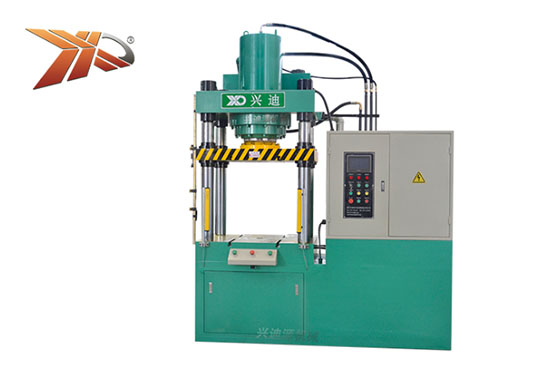
The hydraulic press equipment produced by Zhongyou Heavy Industry is widely used in aerospace, nuclear power, petrochemical, auto parts, bicycle parts, hardware products, instrumentation, medical equipment, household appliances, household utensils, sanitary kitchenware and other manufacturing industries.
GEO-CANARY-86EA1707