


如果您使用液压设备,那句老话“预防胜于治疗”是正确的,液压系统故障的主要原因是液压油污染。事实是,如果您不进行任何预防性维护而让三个月过去(在某些情况下甚至更少!),您就有可能面临风险。这就是为什么假设您操作打包机来保管废金属。由于受污染的液压油,机油开始从汽缸盖中倒出,最终导致汽缸失效。结果?更换缸体的昂贵修理工作,同时还必须关闭压力机并堆积废金属。本文众友重工带来液压油污染的原因及预防性维护检查。
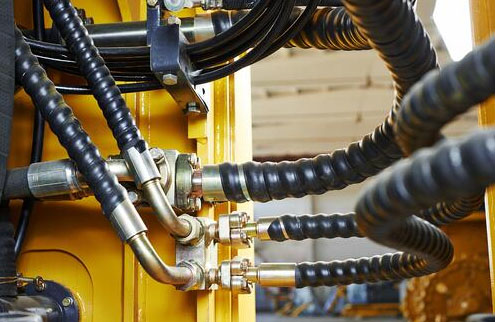
This sounds like an extreme example, but it is more common than you might think. Engineers are often called by the company to solve problems with hydraulic equipment, and only 5-10cm of dirt is found at the bottom of the water tank or in the water tank.
But the good news for maintenance managers is that there are simple steps you can take to prevent these problems. This not only helps protect your equipment from the risk of catastrophic failure, but it can also save your business time and money. In fact, about 80% of failures can be eliminated simply by maintaining a clean system.
1. what causes hydraulic oil pollution?
1) Dirt-Fine particles produced by external sources or inside the system will harden over time and eventually fall into the fine tolerances between moving parts, leading to catastrophic failure.
2) Water-Since the system is open to the atmosphere, water vapor enters the water tank and condenses into liquid water. Over time, water will accumulate in the tank and cause corrosion, which is another source of pollution.
3) Oil oxidation-This undesirable chemical reaction will occur in all hydraulic oils over time and may cause paint effects, which can cause problems.
2. preventive maintenance inspection content:
What inspections are necessary to prevent contamination and other causes of failure? You should follow three main preventive maintenance inspections:
1) Check the oil.
It is essential to monitor the condition of the oil in the hydraulic system. You should strive to achieve the oil cleanliness level specified in the manufacturer's guidelines. This can be done by drawing a sample of the fluid and performing tests to determine the cleanliness and chemical balance of the fluid. However, for higher efficiency, you can consider installing an online pollution monitor to continuously measure the number and size of pollution particles in the system. As long as the pollution level exceeds the specified level, a signal will be sent to the computer in the control room, which will sound an alarm or automatically start an offline filtering cycle.
2) Check your filter element and replace it frequently.
All hydraulic systems produce some type of contamination. The filter can filter pollutants to a microscopic level, but to work effectively, it needs to be checked regularly and replaced when it is blocked by dust. Equipping them with a monitoring mechanism (clogging indicator) is the ideal solution.
3) Check the hose.
The hydraulic hoses are made of synthetic rubber and reinforced by coiled steel. Although they are designed to be very heavy, they will not last forever due to operating pressure and environmental pressure. You should regularly check them for deterioration and replace them after the recommended number of cycles. This ensures safety and reliability.
How often is preventive maintenance 3?
How often you schedule preventive maintenance inspections depends on many factors, including the number of hours the equipment is used each day, the working pressure in the system, the type of fluid used, the cleanliness goals recommended by the manufacturer, and the criticality of maintaining the equipment. The system is your operation.
For example, a system with a ISO8406 cleanliness target of 17/15/12 or lower should be inspected every four months. The system works eight hours a day and the pressure is less than 2000 psi(140 bar).
However, systems with a ISO4406 cleanliness target of 18/16/13 or higher and operating at a pressure exceeding 3000 psi(210 bar) for more than eight hours a day should be inspected every two months.
The device manufacturer's guide will let you know how often you should test your system.
[Introduction to Zhongyou Heavy Industry]]
Zhongyou Heavy Industry (Xingdi Machinery) is a forging equipment manufacturer focusing on fluid pressure forming technology. Since its establishment in 2007, Zhongyou Heavy Industry has been committed to the technological innovation and product development of internal high pressure forming. The main products range from the production of ordinary hydraulic equipment, now developed to the production, research and development of domestic top fluid pressure forming technology forging equipment.
Zhongyou Heavy Industry is a provider of advanced lightweight forming technology. From product research and development, equipment production, mold development, program customization, to final delivery and value-added services, we provide customers with not only a hydraulic equipment, but a Complete set of intelligent manufacturing and forming solutions.
GEO-CANARY-86EA1707