


Hydraulic systems are one of the most versatile ways to generate mechanical force, and they are found everywhere from forklifts to car brakes to industrial processing machinery, and regardless of their specific use, virtually every hydraulic system relies on hoses to transfer fluid from one part of the system to another.
尽管必不可少,但软管也往往是液压系统中最易损坏且最容易出现问题的部件之一。因此,任何经常使用液压系统工作的人都应该知道如何识别软管故障的基本迹象。如果您想提高液压故障排除技能,请继续阅读。本文众友重工带来软管故障的三种常见原因。
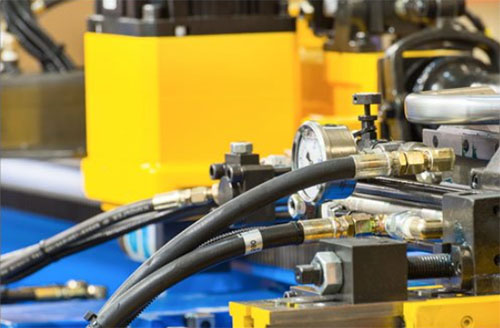
1) Blow pipe:
The hose is connected to your machine through a fitting. The outside of the fitting is screwed onto the threaded port of your machine. The inside of the fitting contains a threaded shell, into which the hydraulic hose itself can then be screwed. A properly installed hose assembly forms a durable, leak-proof seal.
Unfortunately, however, problems often arise when the installer is unable to screw the hose tightly enough into the fitting. In this case, the high pressure of the hydraulic oil will cause the end of the hose to blow out of the joint. When this happens, hoses and fittings often suffer damage, so completely new components must be installed.
The joint is not tightened firmly enough to the port of the machine, which may also cause the joint to leak and blow up. When installing fittings and hoses, technicians can prevent these two problems by using torque wrenches. The torque wrench allows you to measure the exact force exerted on the fitting.
Using a torque wrench can not only avoid joint damage caused by insufficient torque, but also avoid leakage and damage caused by excessive torque. The ideal amount of torque varies from one component to another, which means you must always carefully check the specifications of the components used.
2) Overheating:
Hydraulic hoses typically face high temperature conditions. These high temperatures may be generated from inside the pipe in the form of heat carried by the hydraulic fluid itself. They may also originate from the external environment of the hose. Hoses that operate with heavy machinery usually absorb a lot of heat during operation.
All hydraulic hoses have a rated temperature, which indicates the maximum heat that can be withstood before encountering problems. Overheating usually causes the hose to become hard and brittle because the plasticizer in the hose wall loses its inherent flexibility. Fragile hoses are more likely to develop cracks and other forms of damage, which can lead to leaks.
You can limit the chance of overheating by carefully selecting hoses that meet the normal operating temperature of the hydraulic system. Of course, even carefully selected hoses can become brittle over time. Therefore, you must be vigilant, check the hose regularly, and replace any aging hose as needed.
3) Cracking of outer cover:
The exterior of the hydraulic hose consists of a heavy duty rubber cover. Just below it is a criss-cross network of wires, which add additional reinforcement. Finally, the inside of the hose consists of a separate rubber tube through which the hydraulic oil flows.
The outer layer of the hose is often cracked and torn by rubbing parts near the hydraulic system. Nearby machinery, brackets and even other hoses can cause the outer cover to break due to friction. Hoses subjected to such damage must be replaced. To ensure that the problem does not occur again, the new hose should be rerouted or covered with a protective sleeve.
[Zhongyou Heavy Industry Hydraulic Machine Equipment Advantage]]
Zhongyou Heavy Industry takes fluid pressure forming technology as its core, and its leading products include: internal high pressure forming equipment, plate filling forming equipment, pipe parts hydroforming equipment, water expansion hydroforming equipment, multi-station connected hydraulic deep drawing equipment, four-column hydraulic press equipment, frame hydraulic press equipment, etc. It can design and manufacture special non-standard hydraulic equipment, non-standard oil cylinders, non-standard hydraulic systems and automatic transmission systems according to customer requirements.
The hydraulic press equipment produced by Zhongyou Heavy Industry is widely used in aerospace, nuclear power, petrochemical, auto parts, bicycle parts, hardware products, instrumentation, medical equipment, household appliances, household utensils, sanitary kitchenware and other manufacturing industries.
GEO-CANARY-86EA1707