


CNC lathe tool installation often found that there is a phenomenon of not firmly, this situation how to deal with it?
1. When installing the tool, the tool tip should be the same height as the tool workpiece axis. When roughing and turning large-diameter workpieces, the tool tip should be slightly higher than the workpiece axis. When finishing, the tool tip should be slightly lower than the workpiece axis, but when finishing contours such as cones and arcs, the tool tip should be strictly elevated with the workpiece axis.
2. When there is a tool holder or center frame support, in order to make the tool tip top tight workpiece, the tool is properly installed to the right offset to generate a certain radial force; when there is no tool holder or center frame support, the tool is properly installed to the left to make the radial cutting force as small as possible.
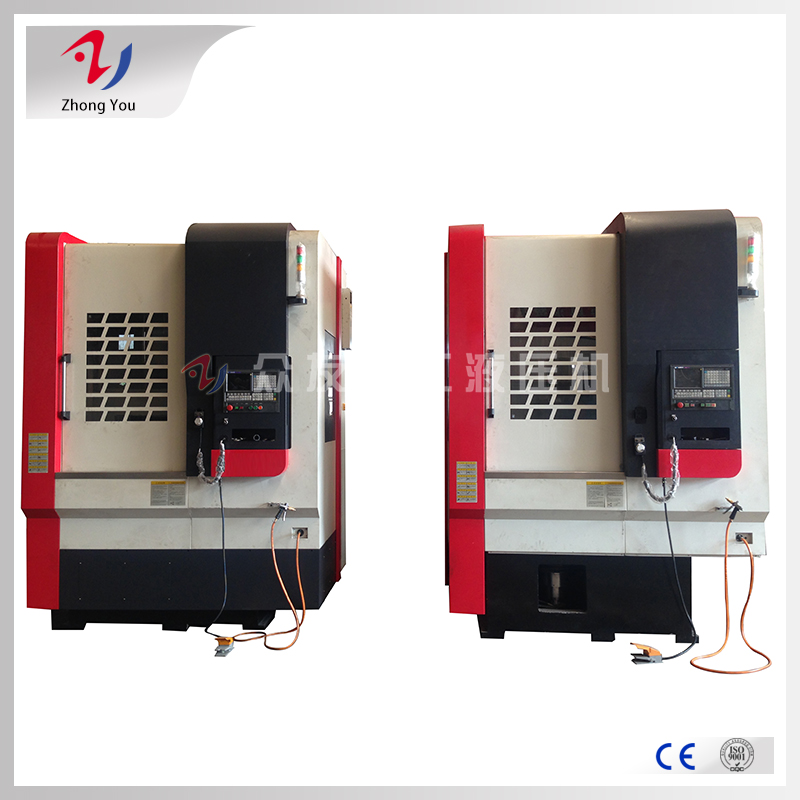
3. The length of the tool should not be too long to prevent cutting vibration caused by poor stiffness, which will bring a series of problems such as rough surface of the workpiece, vibration, and knife. Therefore, it is necessary to control the length of the tool as much as possible, and the tool's clamping is as short as possible under the premise of meeting the demand.
4. The bottom of the knife bar should be flat. If a gasket is used, the gasket should be flat, the front end of the gasket should be aligned, and the number of gaskets should not exceed 2.
5. The tool installation should be firm. Generally, two screws are tightened and fixed alternately. After tightening, the height of the tool tip and the axis of the workpiece are detected again.
6. When using the machine clamp to turn into a tool, the blade and gasket should be wiped clean, and it should be noted that when using screws to fix the blade, the tightening force should be appropriate.